Neighborhood Overview
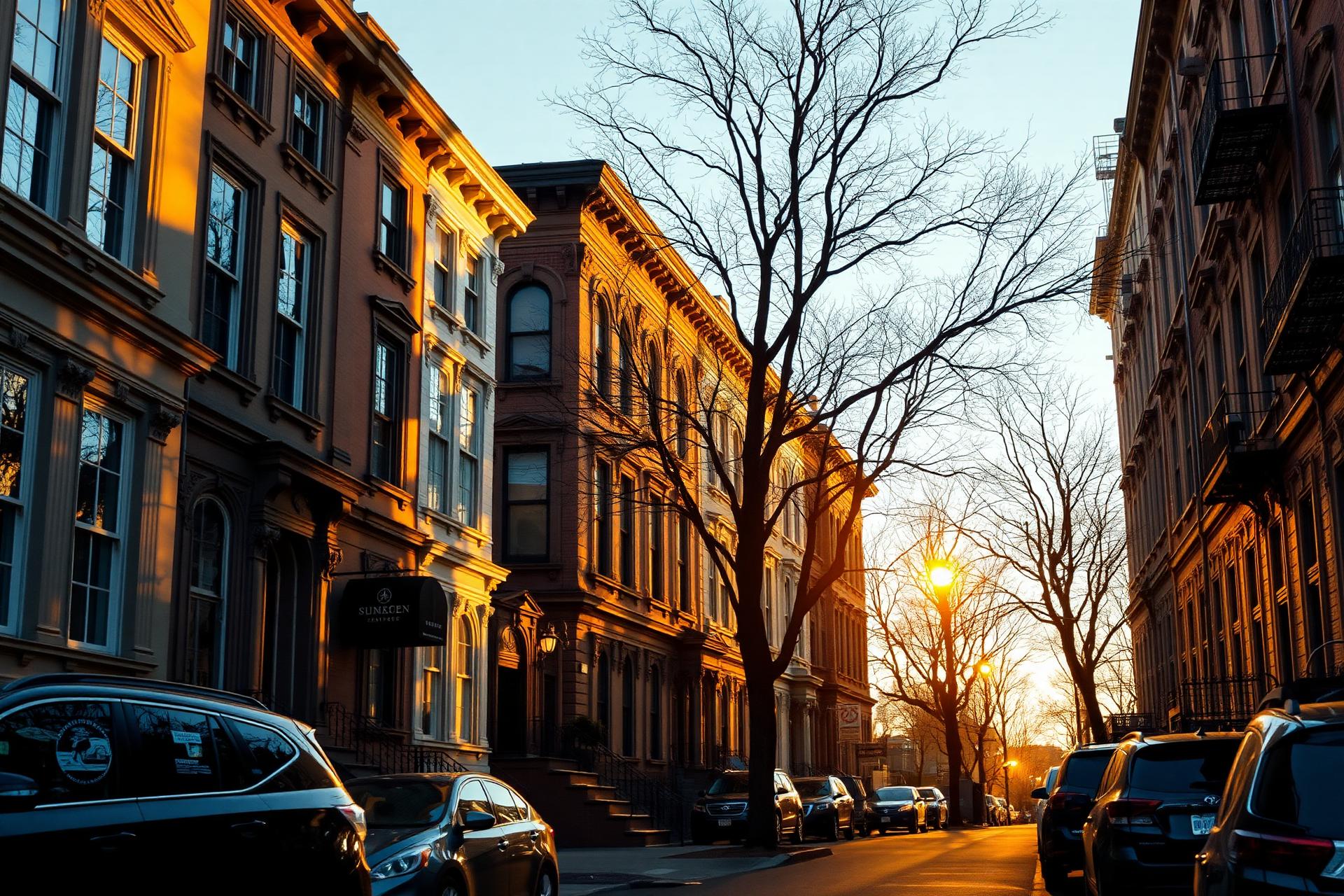
Park Slope occupies the western edge of Prospect Park and stretches roughly from Flatbush Avenue south toward the Prospect Expressway. It is defined by long, tree-lined blocks of nineteenth-century brownstones, a walkable retail spine along Fifth and Seventh Avenues, and a residential culture built around the park itself.
The neighborhood is often used as a shorthand for a specific Brooklyn lifestyle: family-scaled housing, independent shops and restaurants at street level, and a short walk to one of the largest and most-used public parks in New York City. It is one of the more established residential submarkets in the borough, and buyers, sellers, and renters tend to treat it as a long-term decision rather than a short stay.
Housing & Property Types
The housing stock is dominated by nineteenth and early twentieth-century townhouses and brownstones, many still configured as single-family homes and many divided into two-, three-, and four-family layouts. Original detail — parlor floors with high ceilings, plaster moldings, pier mirrors, pocket doors, and rear-garden extensions — is common and often factors heavily into value.
Alongside the townhouse blocks sit prewar co-ops and a growing inventory of newer condominiums, particularly along Fourth Avenue and closer to the Prospect Expressway. Small elevator co-ops with modest monthlies remain a category buyers ask for by name, and newer condo product tends to trade for a premium on light, layout, and outdoor space.
Because so much of the stock is landmarked or falls inside the Park Slope Historic District extension, exterior renovations and additions typically involve Landmarks Preservation Commission review. Buyers considering meaningful work should factor that timeline into any purchase.
Market Perspective
Park Slope tends to hold up as one of the more resilient residential submarkets in Brooklyn. Well-prepared townhouses, floor-through condos with private outdoor space, and low-monthly co-ops in classic prewar buildings generally attract steady interest across market cycles.
Pricing conversations in the neighborhood are almost always block-specific. A property near Prospect Park West carries different assumptions than one on the western edge closer to Fourth Avenue, and buyers price light, floor level, layout, and building financials into offers with more discipline than in less mature submarkets.
Buying in Park Slope
Buyers in Park Slope typically fall into two groups: households buying their first or second home in Brooklyn with a long time horizon, and existing residents trading up within the neighborhood to a townhouse or a larger apartment. Both groups tend to compete for a relatively small set of best-in-class listings each season.
For co-op and condo buyers, building financials, monthly charges, and pet, sublet, and renovation rules matter as much as the apartment itself. For townhouse buyers, structural condition, roof, mechanicals, and any prior work — especially permitted versus unpermitted — belong at the center of due diligence.
Selling in Park Slope
Sellers benefit from taking preparation seriously. Park Slope buyers read finishes, light, and layout closely, and a home that is thoughtfully staged, cleaned, and photographed after minor repairs tends to attract better first-week attention than one rushed to market.
Pricing strategy leans on genuinely comparable trades — same building where possible, same block, same layout, similar condition — rather than aggregate neighborhood averages. Overpricing a Park Slope home is one of the more common ways to slow an otherwise strong sale.
Getting around Park Slope
Park Slope is served by several subway lines and multiple bus routes, with most residential blocks within a short walk of a station.
- F and GLocal service along Seventh and Ninth Avenue corridors.
- RAlong Fourth Avenue, connecting to Downtown Brooklyn and Manhattan.
- 2, 3Grand Army Plaza at the northeastern edge of the neighborhood.
- B, QProspect Park and Seventh Avenue stations at the southeastern edge.
CitiBike stations are common throughout the neighborhood, and Prospect Park's roadways are frequently used by cyclists and runners.
Parks & Public Spaces
Prospect Park is the defining public space and effectively an extension of the neighborhood — used for daily walks, weekend markets, athletic fields, and the Long Meadow.
The park's edges include the Brooklyn Botanic Garden, the Brooklyn Museum, and the Grand Army Plaza greenmarket. Washington Park at the Old Stone House provides a smaller neighborhood green just off Fifth Avenue.
Local Character
The neighborhood is deeply residential, and daily life tends to revolve around the two commercial avenues, the park, and the local school and cultural institutions. Independent bookstores, community-oriented cafés, and long-standing family businesses share the streetscape with newer restaurants and shops.
Weekends bring the greenmarket at Grand Army Plaza, park programming, and a slower pace along the side streets. It is a neighborhood people generally settle into rather than pass through.
Restaurants, Cafés & Small Businesses
Fifth and Seventh Avenues form the two main commercial corridors, with a mix of neighborhood restaurants, cafés, bakeries, wine shops, and independent retail. The Fourth Avenue corridor and streets around the Barclays Center edge add more recent openings.
Rather than a single dining scene, Park Slope reads as a collection of block-level favorites — the kind of places residents return to over years rather than destinations that draw crowds from outside the neighborhood.
What buyers, sellers, and investors ask about Park Slope
What is it like to live in Park Slope?+
Park Slope reads as a settled residential neighborhood with a strong walking culture. Days tend to move between the park, the two commercial avenues, and the residential blocks in between. Households at many life stages live there, and neighborhood institutions — the park, local schools, independent businesses — carry a lot of weight in daily life.
What kinds of homes are common in Park Slope?+
The stock is dominated by nineteenth-century brownstones and townhouses, alongside prewar co-ops and a smaller layer of newer condominiums, especially closer to Fourth Avenue. Some townhouses remain single-family; many have been divided into multi-family layouts.
Is Park Slope a good place to buy property?+
Park Slope is one of Brooklyn's more established residential submarkets, and well-chosen homes have historically held their value across market cycles. The right purchase depends on the specific building, block, condition, and price relative to genuinely comparable trades — not on the neighborhood name alone.
How do landmark and historic district rules affect buyers?+
Portions of Park Slope sit inside the Park Slope Historic District and its extension. Exterior work on landmarked buildings generally requires Landmarks Preservation Commission review. Buyers planning renovations should factor approval timelines and permitted-work expectations into their planning.