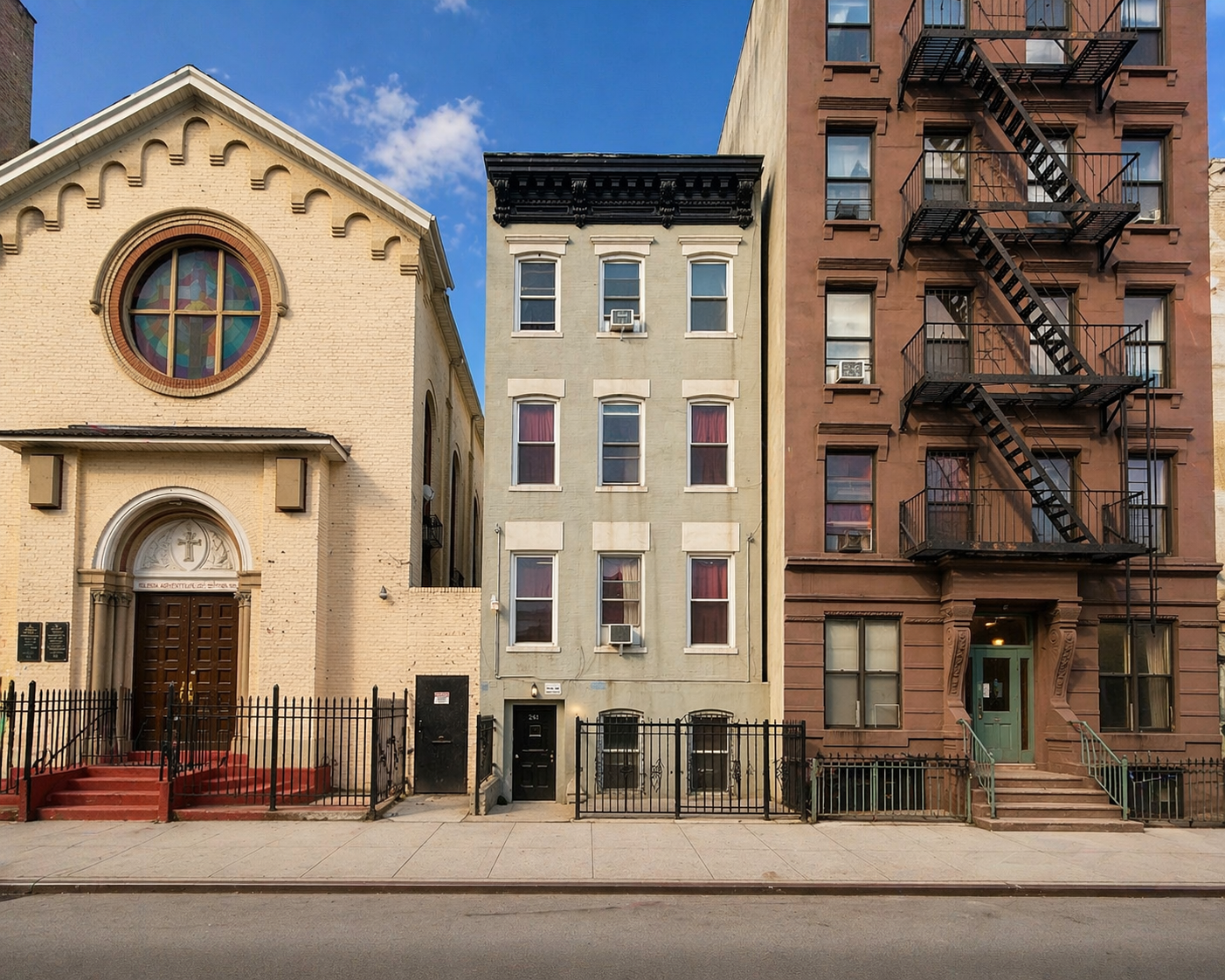
Neighborhood Overview
East Harlem — also known as El Barrio and Spanish Harlem — occupies the northeastern portion of Manhattan, generally from 96th Street north to 142nd Street and from Fifth Avenue east to the East River. Its identity has been shaped over more than a century by successive waves of immigrant communities, most enduringly Puerto Rican and Latin American, alongside long-standing African American and Italian American populations and a growing East and West African presence.
The neighborhood has one of the more layered cultural and architectural histories in Manhattan, and it continues to draw both residents and investors interested in a neighborhood that is genuinely uptown Manhattan without the pricing of Central Park adjacent blocks.
Housing & Property Types
The housing stock is unusually varied. Prewar tenement and small-multifamily buildings dominate much of the neighborhood, alongside brownstones and townhouses on select blocks, large postwar and public housing developments, and a growing set of newer condominium and rental buildings, especially along the avenues.
For multifamily investors, the mix of free-market and rent-stabilized units within a single building is common, and the specific composition of a rent roll shapes both underwriting and long-term strategy.
Market Perspective
East Harlem tends to price at a meaningful discount to neighborhoods immediately to the west and south. That gap has narrowed over time as new development, transit improvements, and broader Manhattan demand have moved uptown, but it remains a defining feature of the submarket.
Residential values reflect the specific block, building, and floor plan more than aggregate neighborhood averages. Investment values reflect the rent roll, building condition, remaining capital needs, and regulatory profile.
Buying in East Harlem
For residential buyers, East Harlem can offer more space and different architectural character than more expensive Manhattan submarkets. Building-specific due diligence — condition, systems, financials in the case of condos and co-ops, permit history for townhouses — remains central.
Selling in East Harlem
Sellers benefit from clearly presenting what a property actually is: condition, layout, and any rent-regulation profile in the case of multifamily. Realistic pricing based on genuinely comparable trades, and thoughtful preparation before launch, tend to produce the strongest results.
Investment Perspective
East Harlem is one of the more relevant multifamily investment submarkets in Manhattan for small and mid-sized buyers. Small multifamily buildings — often five- to ten-unit tenement or brownstone conversions — trade with some regularity, and rent stabilization is a significant part of the picture.
Investors should underwrite each building on its own terms. Free-market versus rent-stabilized composition, remaining Local Law 11 or systems work, tax status, and any regulatory riders on the rent roll all matter. The Opportunity Zone designations on portions of the neighborhood and the potential for assumable financing on specific assets can also factor into structuring.
The submarket rewards patient, well-underwritten capital more than opportunistic short-hold strategies.
Getting around East Harlem
East Harlem is served primarily by the Lexington Avenue subway lines, with additional service on the Second Avenue Subway.
- 4, 5, 6Lexington Avenue line stops at 96th, 103rd, 110th, 116th, and 125th Streets.
- QSecond Avenue Subway service at 96th Street, with planned northward extension.
- Metro-NorthHarlem–125th Street station provides commuter rail service.
Multiple crosstown and north–south bus routes run through the neighborhood, and the FDR Drive provides direct vehicle access to and from the East River.
Parks & Public Spaces
The neighborhood is bracketed by significant public space. Central Park sits along its western edge; Marcus Garvey Park anchors 120th to 124th Streets; and the East River Esplanade runs along the waterfront.
Thomas Jefferson Park, Jackie Robinson Park nearby, and a series of neighborhood playgrounds add additional daily green space.
Local Character
East Harlem has one of the strongest neighborhood identities in Manhattan, shaped by generations of Puerto Rican, Latin American, African American, Italian American, and West African residents. Cultural institutions such as El Museo del Barrio, the Museum of the City of New York on the neighborhood's western edge, and long-standing community organizations are central to daily life.
The commercial streets — 116th Street, 125th Street, Third Avenue, and Lexington Avenue — carry a mix of family-owned businesses, national retail, and newer independent openings.
Restaurants, Cafés & Small Businesses
The dining and small-business landscape reflects the neighborhood's cultural history: long-established Puerto Rican, Mexican, Dominican, and Italian restaurants and bakeries alongside newer cafés, bars, and independent retail.
It is a neighborhood with genuine food identity rather than a curated dining scene, and many of the best-known businesses have been in place for decades.
What buyers, sellers, and investors ask about East Harlem
What should investors know about East Harlem?+
East Harlem is one of the more active small-multifamily submarkets in Manhattan. Rent-stabilized units are common, Opportunity Zone designations cover portions of the neighborhood, and assumable financing occasionally appears on specific assets. Careful underwriting of rent roll composition, capital needs, and regulatory profile is essential.
What kinds of homes are available in East Harlem?+
The stock includes prewar tenement and small-multifamily buildings, brownstones on select blocks, large postwar and public housing developments, and a growing set of newer condominium and rental buildings, particularly along the avenues.
Is East Harlem well connected by transit?+
Yes. The 4, 5, and 6 trains run along Lexington Avenue with multiple stops in the neighborhood, the Q operates on the Second Avenue Subway at 96th Street with a planned northward extension, and Metro-North serves Harlem–125th Street.
What is the character of East Harlem?+
East Harlem has a strong, layered neighborhood identity shaped by decades of Puerto Rican, Latin American, African American, Italian American, and West African communities. Cultural institutions, family-owned businesses, and long-standing organizations are central to how the neighborhood functions day to day.