Commercial Sales and Leasing in New York City
Representation for landlords, tenants, and owners of commercial property across Brooklyn and Manhattan — grounded in positioning, site selection, and careful lease negotiation.
Commercial work centered on fit — the right tenant, the right space, the right terms.
Commercial real estate rewards patience and specificity. A retail space is not only rent per square foot; it is a corridor, an adjacency, a delivery route, and a customer. An office lease is not only term and price; it is how a business will grow into a space and how gracefully it can leave when circumstances change. Every commercial engagement begins by understanding those operating realities, not by reaching for the closest comparable.
Landlords in Brooklyn and Manhattan face different questions than tenants, but the underlying discipline is shared. Owners want spaces filled with tenants who can pay, grow, and preserve the character of the building. Tenants want economics that match their business plan and terms that protect them if the plan evolves. A well-run process makes both sides more legible to each other, and produces cleaner deals as a result.
Engagements span retail leasing along established and emerging corridors, office and professional leasing for small and mid-sized businesses, commercial sales, and landlord and tenant representation. The practice is deliberately generalist across those product types and deliberately careful within each transaction.

Four disciplines within one practice.
Retail Leasing
Storefront leasing along ground-floor corridors — quick-service food and beverage, service retail, boutique, and neighborhood essentials — with attention to corridor dynamics, tenant mix, and long-term fit.
Office Leasing
Office and professional space for growing businesses and established occupiers — build-out considerations, term and option structure, and honest projections about how a team will use a floor.
Commercial Sales
Sale representation for owners of retail condominiums, mixed-use buildings, and net-leased or partially-leased assets, with financial packages that let qualified buyers underwrite quickly.
Landlord & Tenant Representation
Full representation on either side of the table — with the same standard of preparation, market reading, and negotiation applied to whichever seat the client sits in.
Marketing strategy and site selection.
Every commercial engagement takes one of two shapes: a space searching for the right occupant, or a business searching for the right space. The work looks different in each case; the underlying craft is the same.
Marketing Strategy
A commercial space is marketed on its highest-value story — corridor, foot traffic, adjacencies, condition, or the specific uses it can support — rather than a generic inventory listing. Materials are produced to a single editorial standard, and outreach is targeted to the pool of tenants or buyers most likely to value the space.
Site Selection
Site selection begins with a working brief on the business: customer, operating model, unit economics, and growth plan. Options are evaluated in context — not just size and rent, but the practical realities of a lease over five, seven, or ten years in a specific New York City corridor.
Lease Negotiation
Negotiation goes beyond base rent. Term, escalations, free rent, tenant improvement allowances, options to renew, assignment and sublet rights, personal guaranty, and use clauses all matter to how a deal performs over time. Each is negotiated with attention to what protects the client through the full life of the lease.
Sales Advisory
On commercial sales, positioning and financial presentation carry the process. A cleanly presented rent roll, expense statement, and lease abstract earn a serious first read from qualified buyers — and often shorten the path to a fair price.
From brief to signed lease or closing.
- 01
Brief
A working conversation about the business or asset — operating model, timeline, must-haves, and constraints.
- 02
Market Reading
Corridor analysis, comparable leases or sales, and a candid view of current absorption and tenant demand.
- 03
Positioning or Search
For landlords and sellers, a marketing plan; for tenants and buyers, a structured search across viable options.
- 04
Tours & Outreach
Coordinated tours with tenants or buyers, and disciplined follow-up that separates real interest from noise.
- 05
Negotiation
Term sheets, lease or contract negotiation, and coordination with counsel and, where relevant, lenders.
- 06
Closing or Occupancy
Coordination through signature, build-out, and delivery of space or closing of a sale.
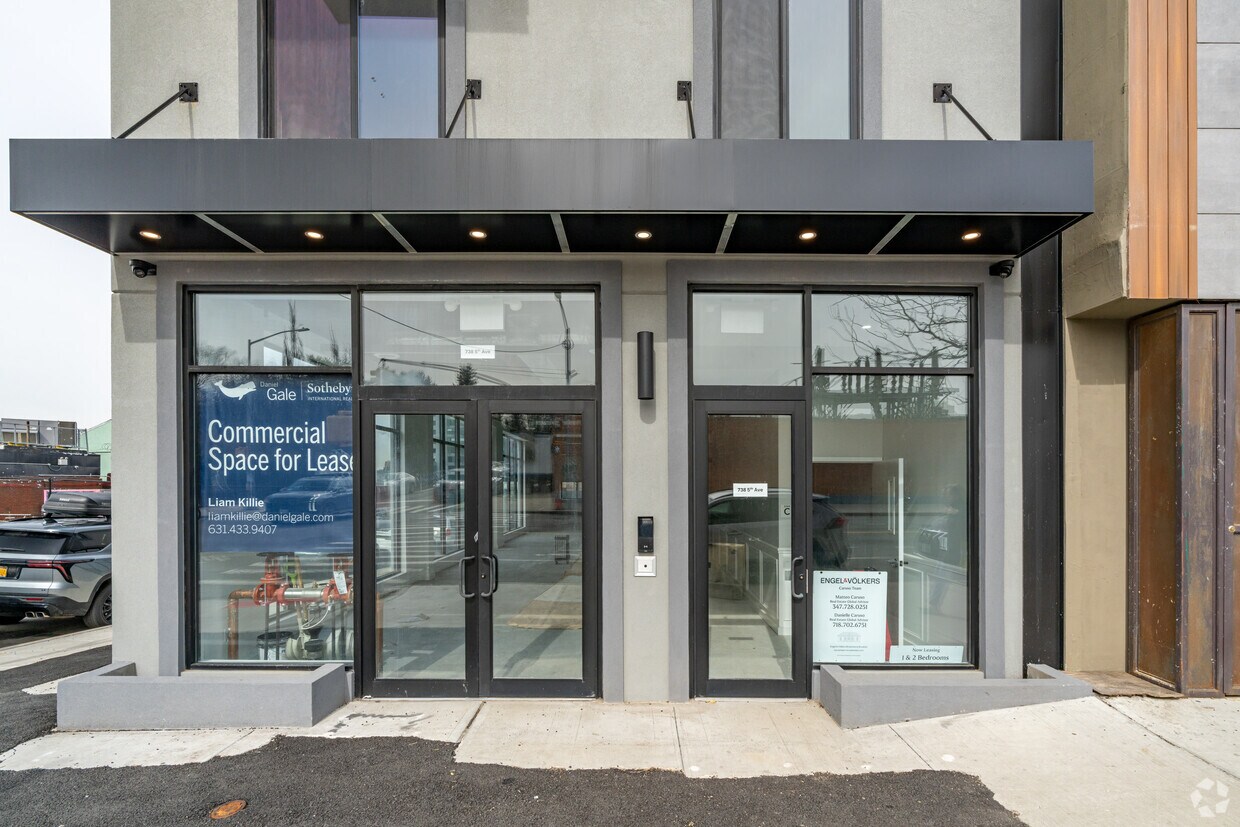
738 Fifth Avenue — Brooklyn.
A current commercial leasing opportunity on Fifth Avenue in Brooklyn. Space details, delivery condition, and lease terms are available on request.
Common questions from landlords and tenants.
What determines commercial rent in a New York City neighborhood?
Rent reflects location within the corridor, frontage, ceiling height, condition, size, term, and current absorption on the block. Comparable leases inform the range, but the pool of qualified tenants for a specific space often matters more than a headline per-square-foot figure.
Who is responsible for build-out and improvements?
Responsibility depends on the deal. Some spaces are delivered in vanilla-box condition; others deliver as-is; others include a landlord contribution or a tenant improvement allowance. The right structure varies by asset, tenant use, and term, and is negotiated alongside base rent.
How long is a typical commercial lease?
Retail leases most often run five to ten years with renewal options; office and professional leases can be shorter for early-stage tenants and longer for established occupiers. Escalations, options, and personal-guaranty structure are negotiated together with term.
What is site selection and why does it matter?
Site selection is the process of matching a business to a location that supports its operating model — foot traffic, adjacencies, visibility, delivery access, demographics, and neighborhood trajectory. A carefully chosen site protects the lease economics; a rushed one can undermine an otherwise strong business plan.
How is a commercial building or vacant space marketed?
Effective marketing pairs a clean set of materials — floor plans, photography, and a clear positioning summary — with targeted outreach to the tenant or buyer pool most likely to value the space. Broad exposure has its place; the harder work is precision.
What is the difference between landlord and tenant representation?
Landlord representation focuses on positioning and marketing a space to reach the right tenants and negotiate the best economics for the owner. Tenant representation begins with the client’s business, evaluates suitable spaces in context, and negotiates lease terms — base rent, escalations, term, options, and improvement structure — on the tenant’s side of the table.
Reading on commercial real estate.

A Guide to Commercial Leasing for New York City Businesses
Key terms, neighborhood dynamics, and negotiation points every operator should understand before signing a lease.

How to Evaluate a Retail Corridor
Reading foot traffic, tenant mix, and vacancy patterns before committing to a location.

Landlord Representation and the Case for Patience
Why holding for the right tenant often outperforms filling a space quickly on softer terms.
Commercial corridors, block by block.
Neighborhood-level context on the residential submarkets that shape retail and office demand nearby.
Marketing a space, or searching for one?
A short conversation is often enough to know whether an engagement makes sense. Landlord, tenant, seller, or buyer — each starts the same way.